BaZi / Four Pillars of Destiny
Your year, month, day, and hour of birth form four pillars that map your innate destiny pattern.
Your year, month, day, and hour of birth form four pillars that map your innate destiny pattern.
The heavenly stem of your day pillar, the core self around which your whole chart revolves.
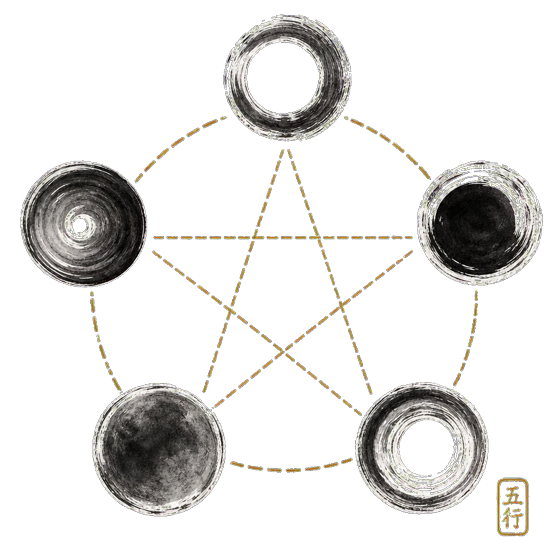
Wood, fire, earth, metal, and water interact in your chart, revealing strengths and imbalances.
Ten-year luck pillars trace how your fortune shifts across the seasons of your life.
Designed for clarity
Read your BaZi chart more clearly: the free result brings your Four Pillars, Five Elements and timing context into one readable chart. The future deep-reading format will be defined from real feedback.
Generate My Free BaZi Chart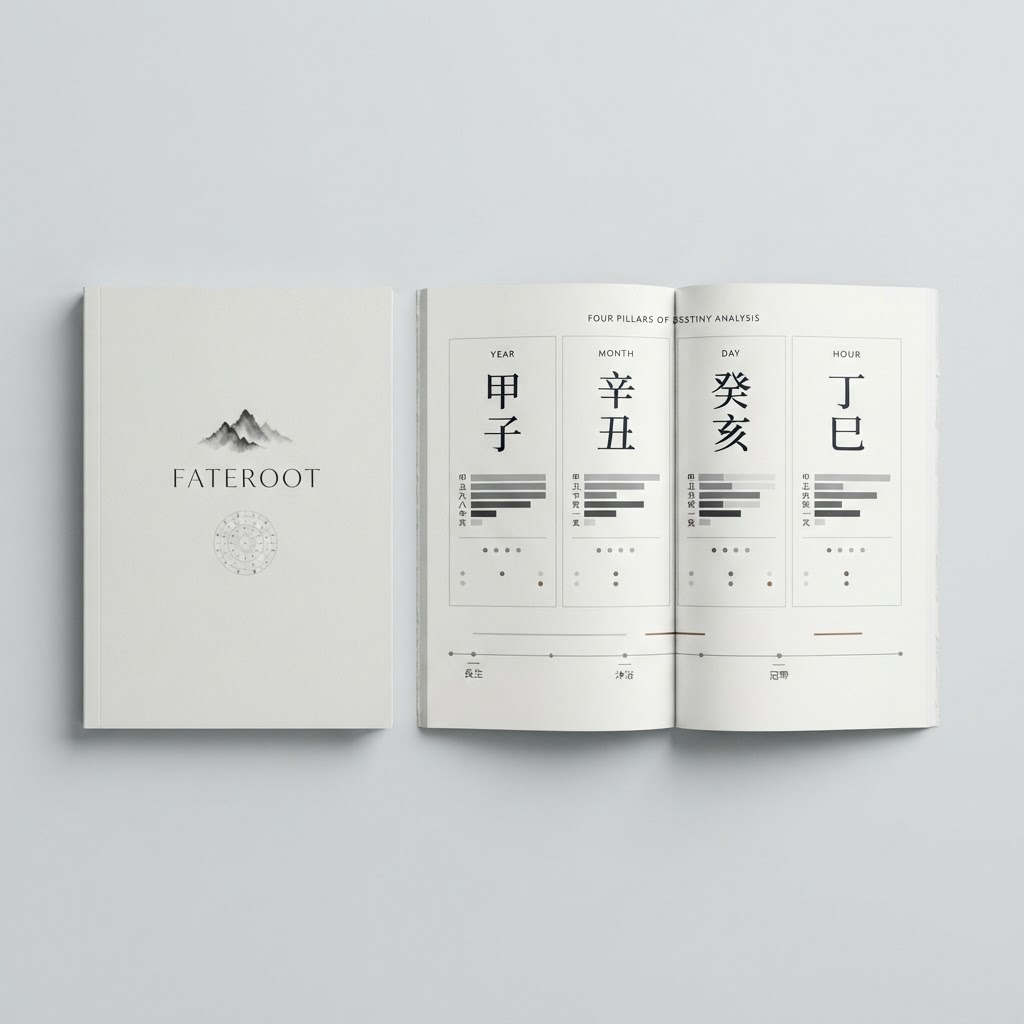
Your zodiac year is only the first layer.
A full BaZi chart looks at when, where and at what time you were born. It uses the year, month, day and hour of birth to create your Four Pillars, giving a more personal starting point than a zodiac sign alone.
Also known as the Four Pillars of Destiny, BaZi uses your birth year, month, day and hour to generate a personal Chinese astrology chart.
BaZi, also called the Four Pillars of Destiny, is the Chinese astrology system behind that chart. Each pillar contains a Heavenly Stem and an Earthly Branch. Together, they form a BaZi chart that is traditionally used to explore patterns in temperament, work style, relationships and life timing. That is why two people born in the same zodiac year can still receive very different chart structures.
FateRoot gives you the chart first, then explains the terms in plain English. You do not need to know how to read the stems, branches or Five Elements before you begin.
A useful BaZi chart needs more than a birthday. Birth time, birthplace, time zone and historical daylight-saving rules can all affect the local time used to establish a chart. FateRoot collects those details before creating your Four Pillars, then presents the result in a format designed for first-time readers.
Your free result includes the structure of your chart, your Day Master and an overview of the Five Elements. It is meant to give you a grounded first view of the system, not a vague horoscope based only on a birth year.
FateRoot first converts the birth date, time and location into the local time needed for the calculation. It then applies calendar and time-zone rules, including daylight saving time where relevant, and calculates a true-solar-time adjustment from the birthplace.
The Four Pillars, Day Master and Five Elements are produced by calculation logic. AI is used after the chart is generated to explain the output in clear language. This separation matters: the chart should come from a repeatable method, while the reading helps you understand how the elements and patterns are commonly interpreted.
Clock time is standardised for a whole time zone, but the sun does not reach its highest point at the same clock time in every city within that zone. In BaZi practice, this difference can matter most near an hour-pillar boundary. A birthplace-based true solar time adjustment helps align the birth time more closely with local solar position before the chart is calculated.
It is not a promise of certainty. It is a transparent method for handling location and time more carefully than a date-only calculator. FateRoot shows when an adjustment is used so that you can understand the basis of your result.
Your free BaZi chart includes your Four Pillars, Day Master, Five Elements balance and a short plain-language overview. The overview introduces patterns you can reflect on in work, relationships and personal direction.
The free result is a starting point. It does not replace the detailed explanations, timing context and personalised guidance included in the full reading.
Enter your date of birth, birth time and birthplace. If you know the city but not the exact coordinates, enter the city and select the matching result. If your birth time is uncertain, use your best available estimate and treat the result as exploratory, especially if it may fall near an hour boundary.
Then generate your chart. The free result includes your Four Pillars, Five Elements balance, core chart structure and current decade context.
For example, a reading may describe a strong Metal pattern as a tendency toward structure, discernment and clear standards. It should not claim that the person is destined for one job or one relationship outcome. A useful interpretation also considers what balances the chart, how the elements interact and which questions the person is trying to answer.
FateRoot uses this practical tone throughout the report. Instead of treating a chart as a fixed verdict, it translates a traditional system into prompts for reflection: what environments support your working style, where do you tend to overextend, and what type of balance may be worth paying attention to?
Chinese zodiac signs are a simple introduction to Chinese astrology. They are based mainly on the birth year. BaZi is more detailed because it uses the year, month, day and hour of birth. Western astrology is a separate tradition with a different chart system and vocabulary.
If you only know your zodiac animal, a BaZi calculator is the next step when you want a more personal chart. Your zodiac sign can be part of the result, but it is not the whole reading.
Clear answers about your chart, calculation method, privacy and use.
Yes. You can generate a free BaZi chart with your Four Pillars, Day Master, Five Elements balance and a free result overview. Sign in to receive credits when you want to unlock a deeper reading.
Use your date of birth, birth time and birthplace. A more precise birth time generally gives a more useful result, particularly around an hour-pillar boundary.
The Day Master is the Heavenly Stem associated with the day you were born. It is often used as a reference point for reading the relationship between the Five Elements in a BaZi chart.
Birthplace helps determine time zone, daylight-saving rules and the true solar time adjustment used in the calculation.
Different calculators may use different assumptions: clock time versus true solar time, historical daylight-saving rules, the real birthplace longitude, or the Zi-hour boundary. FateRoot shows the birthplace, timezone and true solar time basis so you can understand why the result was calculated that way.
FateRoot presents BaZi as a cultural framework for self-reflection. It does not guarantee events, diagnose conditions or replace professional advice.
No. Your birth information is used to generate your chart. The final privacy policy must explain exactly how long it is retained and how you can request deletion.
From the roots of destiny, unfold the map of your life.
Generate My BaZi Chart